
Conversion-focused SEO
We run SEO programs for B2B SaaS brands that want content to produce leads, demos, and sales, not just traffic that looks good in a report and never converts.
Every part of the process sits with us: customer interviews to surface what your buyers actually search for, keyword research filtered for purchase intent, writing the articles, on-page optimization, link building to speed up rankings, and monthly reporting on which articles produced conversions and which did not. If a piece of content does not perform after we publish it, that is on us to fix, not a number to bury in the report.
What you’ll get from our Conversion-focused SEO service
Execution of the entire SEO process, start to finish
Benefit: Most agencies hand you an audit and a list of recommendations, then leave the writing and publishing to your team. The work piles up, nothing gets published, and six months later, the contract ends with very little to show for it. We do the opposite. We identify the keywords, write the articles, optimize the pages, build the links, and report on what those pieces produced. You give us product input through interviews; we run the rest.
Rankings for buying-intent keywords, not vanity traffic
Benefit: A lot of SEO work chases keywords with the highest search volume. The problem is that high-volume keywords are usually broad, informational, and full of people who will never buy from you. We build the keyword list backwards from your customer. We start by interviewing your sales and product teams to understand who buys, why they buy, and what they typed into Google before they did. Those queries become the keywords we target. The traffic you get from this approach is smaller in volume but much more likely to convert.
High-quality content created for you each month.
Benefit: Every article is written by a human writer on our team after a real interview with someone on your side who knows the product. No AI drafts, no generic SEO templates, no freelancer who has never touched the software they are writing about. The point of the interview is to surface specifics: real customer pain points, feature comparisons against competitors, edge cases the product handles well, and objections the sales team hears every week. That kind of detail is what makes an article rank for product-related queries and convert the people who read it.
Targeted link building to speed up rankings
Benefit: Publishing a great article is half the work. Without links pointing at it, ranking for a competitive buyer-intent keyword can take a year or more. We build links to the specific articles that need them through guest posts on relevant industry sites and digital PR. We do not buy bulk links or run private blog networks. We do not chase domain authority for its own sake. Every link is supposed to do a specific job: get a specific page closer to the top of page one for a specific keyword.
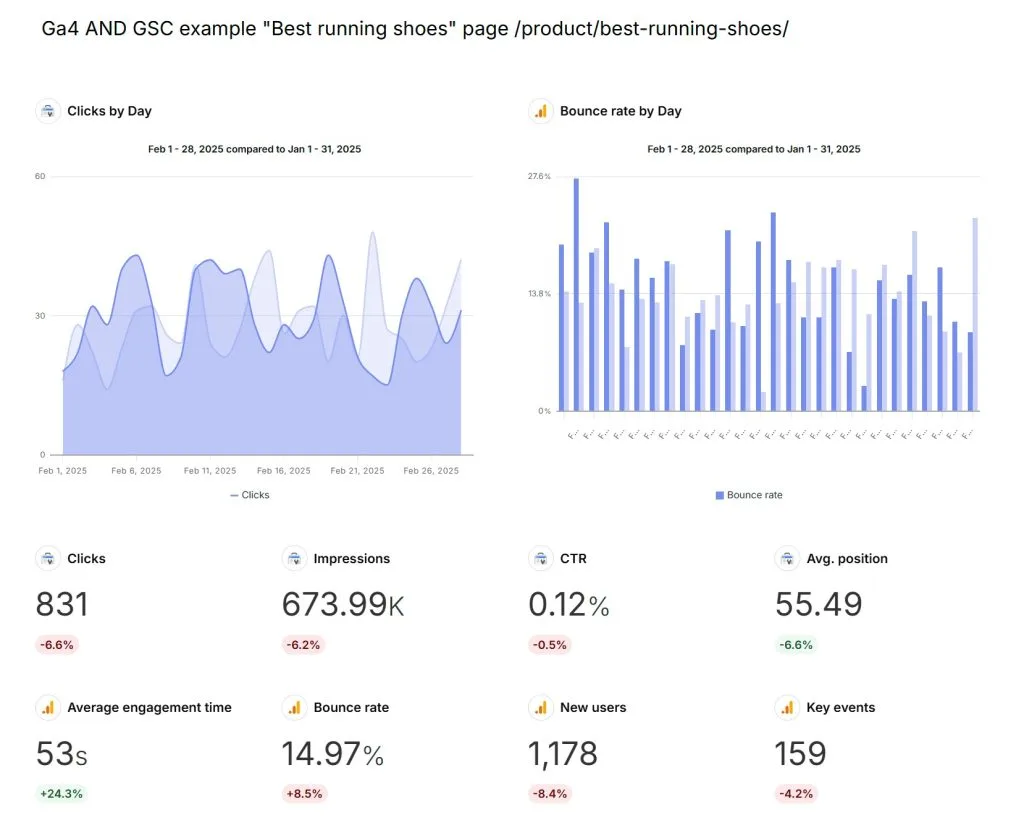
Reporting on conversions per article, every month
Benefit: Most reporting from SEO and content agencies stops at traffic, rankings, and word count. Those are inputs. The output you actually care about is leads, signups, demos, or sales attributed to the content. We set up first-click and last-click conversion tracking for every article we publish and report on it monthly. You will know which posts produced conversions, which produced traffic but no conversions, and what we plan to do about the underperformers.
Ranking for keywords your existing site cannot reach without new content
Benefit: A lot of SEO work focuses on optimizing the pages your site already has, like the homepage, product pages, or a few solution pages. That approach caps what you can rank for, because each existing page can realistically rank for one cluster of related queries. There are usually dozens of valuable buyer-intent keywords your competitors rank for that you are missing entirely because you do not have a page for them yet. We build those pages, one keyword at a time, with the search intent behind that specific query treated as the brief.
Honest reporting when something is not working
Benefit: SEO takes time, and no agency wins on every article. We tell you which pieces are underperforming, why we think that is, and what the plan is. When a strategy needs to change, we say so before you ask. The alternative, which we have seen plenty of times, is an agency that hides behind traffic charts for a year and hopes you do not notice that no leads ever came from the work.
Our processes and frameworks
Our work has produced first-page rankings for 100+ buyer-intent keywords and a measurable lift in qualified leads for the clients who stayed past the six-month mark.
Here is the actual process we run on every engagement. If you have worked with SEO agencies before, you will notice this is not the typical “audit, brief, ghostwrite, hope” workflow.
Step 1: Customer and product interviews
The first three to four weeks of a new engagement are spent on research. We interview your sales team to learn what objections they hear, what features close deals, and what competitors come up most often. We interview product or success teams to understand who actually uses the software and what they use it for. If you have customer call recordings, support transcripts, or churn interviews, we read those too.
What comes out of this is a written summary of who your best customers are, what pain points lead them to search for a solution, and which product differentiators we should be writing about. This is the document that drives every keyword decision and every article angle for the rest of the engagement. Without it, you are doing keyword research in the dark.
Step 2: Buyer-intent keyword research
Most keyword tools sort by search volume, which is the wrong primary filter for a conversion-focused program. We sort by intent. A keyword like “best [your category] software,” “[competitor] alternatives,” or “[specific feature] tool” usually has a fraction of the search volume of a broad informational query, but the people typing it are days or weeks away from buying. Those are the keywords we target first.
For each target keyword, we look at what is currently ranking, what intent the search engine is rewarding, and whether we can realistically compete with a single article. Some keywords need a comparison post. Some need a how-to. Some need a product alternatives page. The format is decided per keyword, not applied as a template.
We also check whether the keyword is one your site can reasonably rank for, given its current authority. Going after the most competitive head term in your category on day one is how a lot of programs waste their first year. We sequence the keywords from achievable to ambitious so the program produces conversions early, not eighteen months in.
Step 3: Article writing
Every article is written by a writer on our team who has first read the customer research document and either sat in on or reviewed the recording of an interview with someone on your team about the specific topic. The writer drafts, an editor on our side reviews for structure and SEO, and then the draft goes to you for product accuracy.
This is where most agencies cut corners and where most content programs quietly fail. A writer with no product context will produce something that reads like every other article on the topic, which is exactly what does not rank and does not convert. The interviews are not optional, and they are not a sales gimmick. They are the input that makes the writing different.
We do not use AI to draft articles. We use it for some research and quality checks, but the prose is written by people. If that ever changes, we will tell you on the first call.
Step 4: On-page SEO and internal linking
Once the article is approved, we handle the on-page work: title tags, meta descriptions, header structure, schema where it helps, internal links to and from the rest of your site, and image optimization. If your site is on a CMS, we can publish to directly, we publish it. If not, we hand off a clean draft with publishing instructions.
We also revisit on-page elements as the article ages. Title tags get rewritten when the article is stuck on page two. Internal links get added as new articles are published. The page is not done when it goes live; it is done when it ranks and converts.
Step 5: Link building to ranking-stage articles
For target keywords that need links to rank, we run a campaign to specific articles, not the homepage. Most of this is done through guest posts on relevant industry sites and selective digital PR. The volume of links per article is decided by what is currently ranking and what our analysis says we need to compete. Some articles get to page one with no link building at all. Some need three or four good links to break into the top three positions. We are conservative about this, and we tell you what we are building and why.
If your site is new and has very low domain authority, the first few months of link building are aimed at the site as a whole, not individual articles. After that, the links are pointed at specific pages.
Step 6: Conversion attribution and monthly reporting
Every month, you get a report that covers, for each article we have published: traffic, ranking position for the target keyword, last-click conversions, first-click conversions in a 90-day window, and a short note from us on what is working and what we want to change.
We use both first-click and last-click attribution because they tell you different things. Last-click shows you the posts that closed the conversion in the same session. First-click shows you the posts that brought the eventual customer to your site for the first time, sometimes weeks before they signed up. Reporting only on last-click, which most agencies do, will systematically undercount the value of content that introduces buyers to your brand.
We are upfront about the limits of attribution. Cross-device behavior, conversion windows longer than 90 days, and word-of-mouth introductions all get missed by analytics, which means the numbers in our reports are a lower bound on the actual lift, not the full picture. We say this in the first report and again in the last one.
Step 7: Refresh and re-target
Articles age. Search intent shifts. New competitors publish better posts. Every quarter we revisit older articles and decide whether to update them, expand them, re-target them at a slightly different keyword, or build links to them to push them up. About a third of the conversion lift in any engagement past the first year comes from refreshes, not new publishing.
Return on investment on our SEO and content services
Here is why most companies that work with us choose us over hiring in-house, hiring a different agency, or doing nothing.
- You pay for leads, not articles. We do not bill by word count or by article count. We measure success by conversions attributed to the content we produce. If an engagement is not producing conversions after enough time has passed for SEO to work, that is a conversation we initiate, not one you have to chase.
- Cheaper than the in-house equivalent. A serious in-house SEO program needs at least a strategist, a writer, a link-building specialist, and an analyst. The fully loaded cost of those four roles is well above what we charge. We bring all of those functions in one engagement, on day one.
- Faster ramp. Hiring an SEO manager takes two to three months, and then it takes another two to three months for them to get productive. We start producing in week one because the process is already built and the team is already trained on it.
- Fewer rookie mistakes. We have already made the mistakes a new hire is going to make. Wrong keywords, articles that read fine but never convert, link building that wastes budget, and attribution setups that report the wrong number. The cost of those mistakes, in time and budget, usually equals or exceeds the cost of working with us for the first year.
- Honest timelines. SEO takes time. Most articles take six months to reach the rankings they will eventually settle at, and some categories take longer. We say this on the first call, we say it again before you sign, and we say it in every monthly report. Anyone who promises rankings in 30 or 60 days is selling you something we cannot deliver and would not want to.
- No long contracts. We do not require six or twelve-month contracts. The work is structured so that if it is not producing what we promised by the time you can fairly evaluate it, you can leave. Most clients stay longer than they expected to, but the option matters.
Pricing
Our base service is $10,000 per month. That includes everything required to run the program:
- Customer and product interviews
- Buyer-intent keyword research and content strategy
- Writing of articles by our in-house team
- On-page SEO and publishing
- Link building to ranking-stage articles
- First-click and last-click conversion attribution setup
- Monthly reporting tied to conversions, not vanity metrics
- A dedicated content strategist and writing team for your account
The base tier covers a defined number of articles per month. If you want a higher publishing cadence, more aggressive link building, or coverage across multiple sub-brands, the engagement scales from there. We discount for annual contracts, but we do not require one.
The price covers what an in-house SEO and content team would need a year and four hires to match. If that is not the right tradeoff for your business, we will say so on the first call rather than try to fit you into the wrong service.
Get in touch
If you would like to talk about whether Conversion-focused SEO is a fit for your business, fill out the form, and we will reply within two business days. The first call is a working conversation about your product, your customers, and where SEO could realistically produce results for you, not a sales pitch.